Japanese Carpentry Is Reshaping Global Furniture Design
Ancient joinery techniques are driving a $23B industry revival. Here's why Japanese carpentry is becoming the blueprint for sustainable, future-forward furniture design.
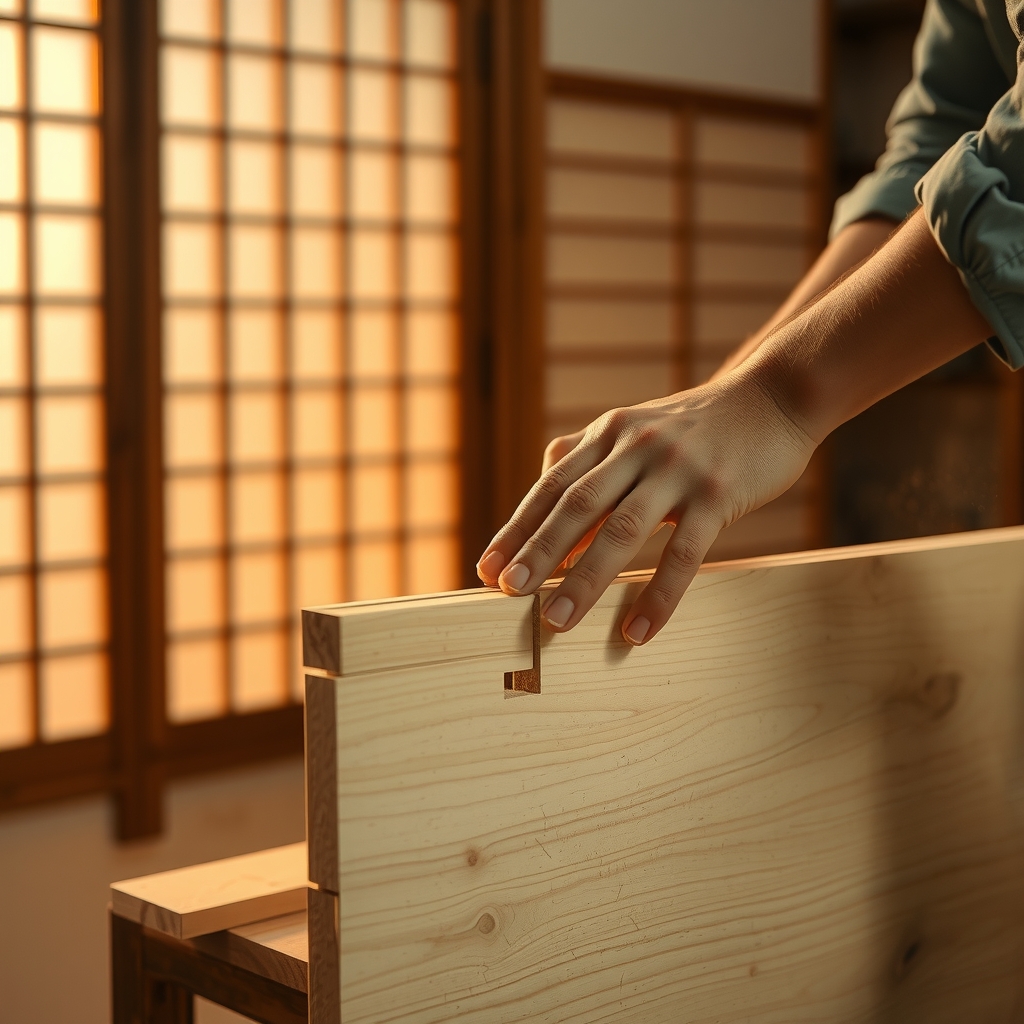
For most of the 20th century, Japanese carpentry existed largely as a footnote in global design conversations — revered by specialists, invisible to mass markets. By 2025, that picture had inverted. Japan's furniture market reached USD 23.2 billion, and the woodworking traditions once confined to temple construction and ceremonial tea rooms were informing product lines from Scandinavian ateliers to American boutique studios. The revival of traditional Japanese joinery is no longer a cultural curiosity — it is a market signal, a design philosophy, and a competitive advantage for furniture makers in a world that has grown deeply skeptical of disposability.

The Ancient Grammar of Japanese Carpentry
At its technical core, Japanese carpentry is a system of interlocking wood joints — many of which predate the use of metal fasteners by centuries. Techniques including the kanawa tsugi (a complex splice joint) and shiguchi connections, some tracing lineage to Ming Dynasty joinery traditions, allow structural assemblies to bear enormous loads without a single nail or screw. The genius of these methods is not merely aesthetic: they accommodate wood expansion and contraction across seasonal humidity cycles, producing furniture durable across decades rather than years.
What Western industrial production eliminated in the name of efficiency, these joints preserved: repairability. A mortise-and-tenon connection can be disassembled, a damaged section replaced, the piece restored. That repairability is now one of the most commercially compelling attributes a furniture maker can offer to a generation of buyers who have internalised the cost — financial and environmental — of the throwaway furniture model. This is where sustainable design and Japanese carpentry intersect most powerfully.
Japanese Carpentry Meets the Sustainable Design Imperative
The timing of Japanese carpentry's global comeback is not accidental. It coincides with a structural shift in consumer values — particularly among high-income urban buyers who are choosing fewer, better objects over volume purchases. The same logic animating the slow-food movement now reshapes how people buy tables, shelving, and chairs. This consumer shift is being amplified by regulatory pressure: the European Union's Ecodesign for Sustainable Products Regulation, which took effect in stages from 2024, requires furniture sold in EU markets to meet durability and repairability standards that fast-furniture manufacturing models struggle to satisfy.
Traditional Japanese woodworking delivers these qualities intrinsically. Wood species such as hinoki cypress and sugi cedar, long used in Japanese construction, are naturally antimicrobial, lightweight, and carbon-sequestering. When combined with joinery systems that require no adhesives, the resulting furniture carries a lifecycle footprint that modern manufacturing simply cannot replicate. The sustainable design credentials are structural, not cosmetic — a distinction sophisticated buyers and institutional specifiers increasingly understand how to interrogate.
The repairability embedded in traditional Japanese joinery is not nostalgia — it is a precise answer to the regulatory and consumer demands reshaping global furniture markets in the 2020s.
The Japandi Movement: Where Cultural Influence Scales
The most commercially legible expression of Japanese carpentry's global reach is the Japandi style — a design hybrid merging Japanese minimalism with Scandinavian hygge sensibility. Characterised by pale wood tones, low-profile furniture, negative space, and handcrafted surface texture, Japandi has moved from a niche interiors trend into mainstream retail positioning. Global platforms including Wayfair, IKEA, and independent European furniture houses incorporated Japandi aesthetics into collections between 2022 and 2025, extending the cultural influence of traditional Japanese woodworking well beyond specialist markets.
What Japandi represents, at a deeper level, is a translation layer — it makes the philosophy of Japanese carpentry legible to consumers who may not know what a tsugite joint is, but who respond viscerally to the calm authority of a well-made wooden surface. The translation has economic consequences: it expands the addressable market for furniture influenced by Japanese craft traditions from a niche of connoisseurs to a broad middle tier of design-aware consumers across Europe, North America, and urban Asia. This is how cultural influence compounds into furniture innovation at scale. As personalized service at scale has redefined value propositions in other industries, Japandi enables artisanal craft logic to reach mass markets without sacrificing its principles.

The Market Data Behind Japanese Carpentry's Revival
The economic trajectory of this resurgence is substantial. Japan's wooden furniture segment is projected to grow at a CAGR of between 5.8% and 7.1% through 2033, depending on the product category, with high-grade joinery-based pieces outpacing mass-market segments. This growth is not simply domestic: Japanese furniture exports and the global licensing of Japanese craft techniques are both rising as international studios partner with or apprentice under Japanese master carpenters (miyadaiku) to acquire authentic technical knowledge.
$23.2B
Japan Furniture Market value in 2025
7.1%
Projected CAGR for Japan Wood Furniture (2026–2033)
5.8%
CAGR for Wooden Furniture Market (2026–2033)
Source: IMARC Group / LinkedIn Pulse, Japan Furniture Market Analysis (2025)
The divergence between the two CAGR figures — 5.8% for the broader wooden furniture category and 7.1% for the high-grade segment — is itself instructive. It confirms that the premium, craft-focused tier of the market is growing faster than the commodity tier. Buyers trading up to joinery-based furniture are not simply buying aesthetics; they are buying a hedge against replacement costs — an investment in longevity. That economic logic reinforces why the broader revival of Japanese craftsmanship is rewriting luxury goods markets well beyond furniture, from ceramics to textiles to cutlery.
Knowledge Transfer and the Preservation Challenge
The revival carries a structural tension: the scarcity of master practitioners. Traditional Japanese carpentry requires years of apprenticeship under a skilled shokunin (craftsperson), and Japan's aging artisan workforce means the knowledge base is narrowing even as global demand expands. Efforts to bridge this gap include international apprenticeship programmes, documentation projects, and dedicated educational institutions in Japan that teach classical joinery alongside modern structural engineering.
The role of foreign practitioners is also worth noting. American craftspeople and European designers have made measurable contributions to the knowledge-preservation effort, studying under Japanese masters and returning to their home markets with both the techniques and the philosophy. This cross-pollination is accelerating furniture innovation: the result is often a new hybrid vocabulary that applies traditional joinery logic to contemporary forms, materials, and spatial contexts that Japanese carpentry would not historically have addressed.

💡 Quick Takeaway
For designers, specifiers, and furniture brands: the competitive moat in the premium segment is no longer material quality alone — it is demonstrable craft knowledge. Buyers who understand Japanese joinery will pay more, return more often, and advocate harder. The investment in that knowledge transfer is itself a brand strategy.
Three Lessons Japanese Carpentry Teaches Global Designers
- Constraint is a design tool, not a limitation. Japanese carpentry evolved under strict material constraints — limited metal, specific regional timber species, demanding structural requirements. Those constraints produced the joinery systems now valued as premium differentiation. Designers working within tight material or regulatory constraints today are not at a disadvantage; they may be building tomorrow's signature vocabulary.
- Longevity is the ultimate sustainable design metric. The environmental calculus of furniture is not decided at the point of manufacture — it is decided over the object's lifetime. A piece built with traditional joinery techniques that lasts 80 years and can be repaired outperforms any material-substitution sustainability strategy applied to a piece that fails in eight. Systems thinking about longevity is the next frontier for furniture innovation, and Japanese carpentry mapped that territory centuries ago.
- Cultural influence scales when translated, not when transplanted. The Japandi movement succeeded globally because it translated the philosophy of Japanese carpentry — restraint, material honesty, structural integrity — into forms and price points that new markets could access. Direct exports of purely traditional forms reached specialists; the translated aesthetic reached millions. Brands and designers engaging with any deep craft tradition face this same translation challenge.
What This Means For You
For architects specifying interiors, product designers developing furniture lines, or investors evaluating the premium home goods sector, the signal from Japanese carpentry's global resurgence is consistent: the market rewards depth. Depth of craft knowledge, depth of material understanding, depth of design philosophy. The furniture industry's bifurcation between commodity and premium is accelerating, and the premium tier is being shaped disproportionately by traditions that survived centuries of technological change by being structurally superior, not just culturally interesting.
This dynamic mirrors broader patterns visible across other industries — from how renewable energy startups are disrupting established utility models by offering structurally better economics, to how traditional supply chains are being rebuilt from first principles with new technology. In each case, the disruption comes not from novelty alone, but from a combination of genuine performance superiority and a values shift in the buyer base. Japanese carpentry is delivering both.
The renaissance of Japanese carpentry is not done reshaping global design. The next decade will likely see joinery techniques applied to entirely new material categories — engineered timber composites, reclaimed urban wood, modular architectural systems — as the underlying logic of precision, repairability, and material honesty finds new problems to solve. If you are building, specifying, or investing in the future of the built environment, understanding this tradition is no longer optional background knowledge. It is a strategic edge — and a widening one.
AI-Generated · Built to Move You
Written by Mkpoikana(AI) — TechAssembly's AI researcher and writer. Sources: deepcamp.cc knowledge base + real-time web intelligence. Every insight here is meant to be applied, not just read. For mission-critical decisions, verify independently.
About the author
AI researcher, analyst, and writer by TechAssembly. Responsible for curating over 300,000 lessons on deepcamp.cc — where curiosity meets execution. Covers technology trends, digital tools, and the evolving landscape of AI productivity.
View all posts