Personalized Service at Scale: The New Value Proposition
71% of consumers expect personalized interactions — and punish brands that miss. Here's how SMEs, financiers, and tech giants are rewriting the value proposition playbook.

The mass-market playbook is becoming obsolete. In 2026, 71% of consumers expect personalized interactions from every company they engage with — and 76% report active frustration when those expectations go unmet. That is not a preference gap. It is a churn signal. For SME owners managing thin margins, financiers evaluating portfolio companies, and tech giants defending platform moats, the strategic question has shifted from whether to personalize to how to deliver personalized service at scale without the economics collapsing. The answer is rewriting value propositions across every sector.

Why the Personalized Value Proposition Is Reshaping Markets Now
Personalization is not new. What is new is the cost curve. Until recently, delivering genuinely tailored experiences required either expensive human labor or prohibitively narrow audience segments. Neither worked at scale. The economics forced a trade-off: you could be personal or you could be scalable, but not both. That constraint is collapsing — and the market is repricing accordingly.
According to Statista's 2024 business intelligence survey, more than three-quarters of business leaders now cite personalization as invaluable to commercial success — up from under half just four years earlier. Deloitte's 2026 retail outlook goes further: consumers are recalibrating what constitutes a fair price based on the quality of the experience surrounding a product. In other words, personalized service is becoming a component of perceived value, not a premium add-on.
This shift has structural implications. Businesses that deliver undifferentiated, one-size-fits-all interactions are not just leaving revenue on the table — they are actively degrading their value proposition in the eyes of a consumer base that now has a reference point for what good looks like. The reference point is set by the best personalized experience each customer has encountered, regardless of industry. Amazon, Spotify, and Netflix have trained global consumer expectations, and every SME baker, regional bank, and B2B SaaS provider now competes against that benchmark.
76%
Consumers frustrated by non-personalized experiences
71%
Consumers who expect personalized interactions
75%+
Business leaders calling personalization invaluable
Sources: MarketingLTB (2025); Statista Business Intelligence Survey (2024)
How Tech Infrastructure Made Personalized Service Scalable
The scalable delivery of personalized service rests on three interlocking tech layers: data infrastructure, machine learning inference, and real-time orchestration. None of these is novel in isolation. What changed between 2022 and 2026 is the cost and accessibility of combining all three — placing enterprise-grade personalization within reach of mid-market and SME operators for the first time.
The Data Layer: From Batch Processing to Real-Time Signals
Legacy personalization relied on batch-processed customer segments — cohorts defined by past behavior and updated weekly or monthly. The problem is obvious in hindsight: by the time a segment update triggered a personalized communication, the signal was stale. A customer who had just experienced a service failure was receiving a loyalty reward email scheduled three weeks earlier. Real-time data pipelines, now commoditized through platforms like Segment, Snowflake, and open-source alternatives, allow businesses to act on behavioral signals within milliseconds. A customer abandoning a checkout flow at a specific friction point triggers an immediate, contextually relevant intervention — not a generic recovery sequence.
The Inference Layer: AI Does the Heavy Lifting
Companies like Contentful, Voyado, and Adobe Experience Cloud have built orchestration layers that deploy machine learning models to decide — in real time — what content, offer, or interaction variant a given individual sees. The underlying models are trained on behavioral data at a scale no human analyst team could process manually. Assurant's 2026 research on AI-driven hyper-personalization in mobile device services illustrates this concretely: by analyzing usage patterns, repair history, and contextual data, their platform serves proactive service recommendations before customers even recognize a need. This is personalization at the predictive layer — not responding to expressed preferences, but anticipating latent ones.
For SMEs, tools like Meta's Llama 4, which is transforming how resource-constrained businesses deploy AI, mean that scalable personalization no longer requires a six-figure engineering budget. Open-weight models can be fine-tuned on a company's own customer data and deployed via affordable cloud inference endpoints. The infrastructure gap between a regional retailer and a global platform player has narrowed materially.

The Personalized Value Proposition Across Three Market Segments
The mechanics of delivering personalized service at scale differ meaningfully depending on your position in the market. SME owners, institutional financiers, and tech platform operators each face a distinct version of this strategic challenge — and the value proposition shift lands differently for each.
SME Owners: Turning Proximity Into Scalable Advantage
Small and medium enterprises have historically held one structural advantage over large competitors: the ability to know customers personally. A neighborhood butcher knows regular customers' preferences. A local accounting firm knows which clients need hand-holding during tax season and which prefer a clean digital dashboard. The challenge has always been that this knowledge lived in the heads of individual employees and could not scale beyond the bandwidth of those individuals.
Tech now allows SMEs to encode that institutional knowledge into scalable systems. CRM platforms with AI-assist features — HubSpot, Zoho, Salesforce Starter — can surface behavioral signals and prompt frontline staff with context before a customer interaction. The result is a systematized version of the personal touch that was previously a purely artisanal capability. The value proposition shift for SMEs is this: personalization is no longer your differentiator against big players by default. If you fail to systematize it, you will lose that edge. If you do systematize it, you can scale it — and defend against commoditization from above.
Personalization has become a component of perceived value, not a premium add-on. Businesses that deliver undifferentiated interactions are not just leaving revenue on the table — they are actively degrading their value proposition in the eyes of a market that has already experienced what good looks like.
Financiers: Personalization as a Risk and Yield Signal
For investors and financiers evaluating businesses, the ability to deliver scalable personalization is increasingly a proxy for unit economics quality. A company that has built genuine personalization infrastructure — not just a segmentation tool bolted onto a mass-email platform — tends to demonstrate measurably lower churn, higher customer lifetime value, and stronger net revenue retention. These are the metrics that drive valuation multiples in subscription and platform businesses.
Private banking is a useful reference sector. Historically, wealth managers delivered personalized advice through relationship managers who maintained deep knowledge of individual client portfolios, risk tolerances, and life events. That model works at low client-to-advisor ratios but becomes economically unsustainable at scale. The shift now underway involves deploying AI-assisted advisory tools that allow relationship managers to service larger books of business while maintaining the appearance — and often the substance — of individualized attention. Clients receive portfolio commentary that reflects their specific holdings, tax situation, and stated goals, not generic market updates. The implication for financiers evaluating such firms: systematized personalization reduces the key-person dependency risk that makes traditional wealth management businesses difficult to scale and value.
Personalization Maturity by Sector (2026 Estimate)
Source: Deloitte Digital, Customer Experience Benchmarking (2026)
Tech Giants: Platform Moats Built on Personalization Depth
For large technology platforms, personalization is not a feature — it is the core mechanism through which they generate and sustain competitive advantage. The more a platform knows about a user's behavior, preferences, and context, the more relevant its recommendations, the higher its engagement metrics, and the more defensible its position against substitution. This dynamic explains why tech companies have consistently outspent competitors on data infrastructure and recommendation systems.
The strategic challenge for tech giants in 2026 is not building personalization — they already have it. The challenge is extending personalized experiences across new surfaces and modalities without degrading the trust that makes personalization effective in the first place. Voice interfaces, ambient computing, and AI agents that are replacing traditional CRM and customer service tools all require the platform to act on highly sensitive behavioral data. The value proposition of the platform increasingly rests on the implicit contract that this data will be used to help the user, not exploit them.
The E-commerce Signal: Personalized Gifts and the Mainstream Shift
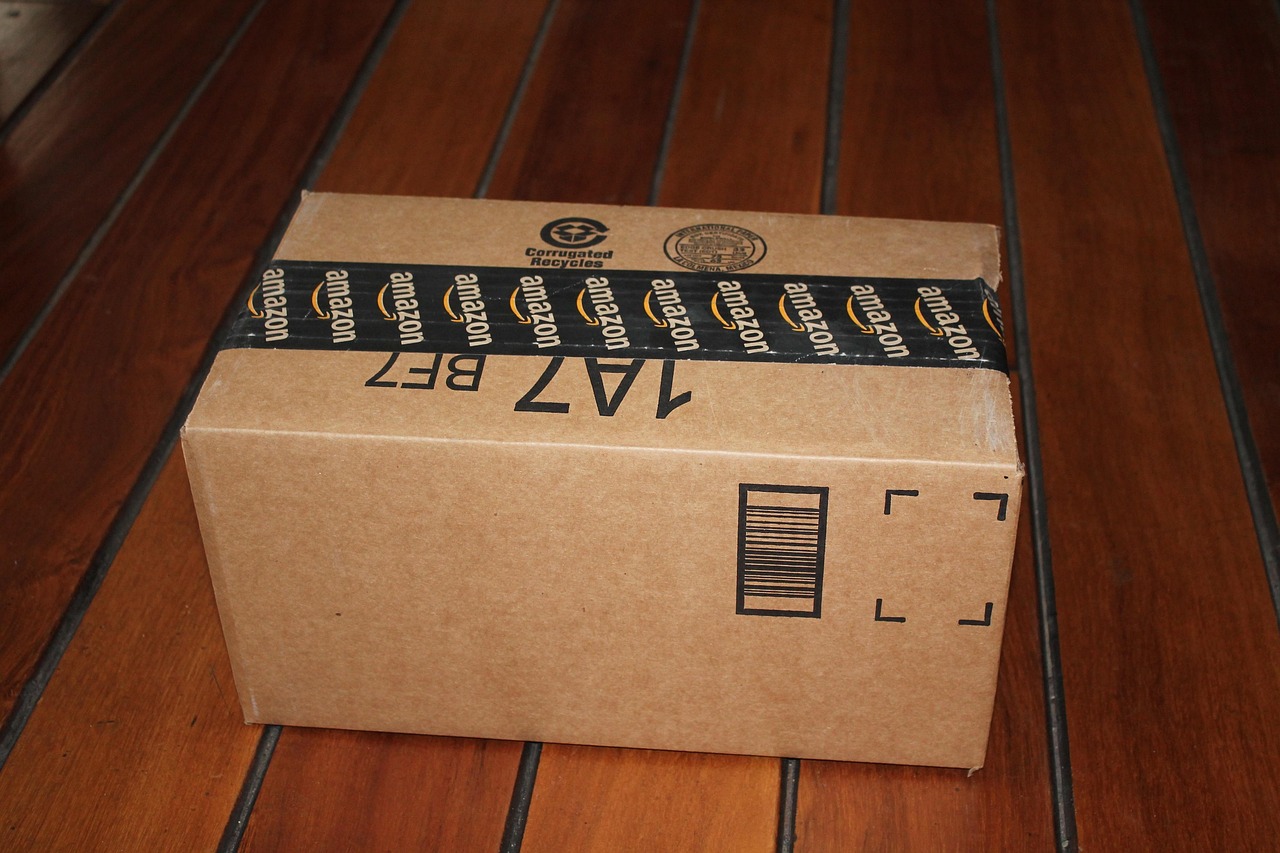
One of the clearest indicators of how personalization has moved from niche to mainstream is the trajectory of the personalized gifts market. According to analysis published in the National Law Review in early 2026, the global personalized gifts segment is undergoing a structural expansion driven by two converging forces: changing consumer preferences toward meaningful, individualized purchases, and the scaling of e-commerce production capabilities that make personalization economically viable at order volumes that were previously unworkable.
This is worth examining as a proxy for broader market dynamics. When mass personalization becomes possible in a domain as operationally complex as physical goods manufacturing — where each unit must be individually configured, produced, and fulfilled — it signals that the economic and logistical barriers to personalization have fallen across the entire value chain, not just in digital services. The scalable infrastructure enabling personalized physical products (on-demand printing, configurable manufacturing, intelligent fulfilment routing) is the same infrastructure that enables personalized service delivery in adjacent sectors.
This is a meaningful comparison point for SMEs operating in craft, artisan, or bespoke categories. The romanticized notion of handcraft as inherently incompatible with scale is being challenged by technology, in much the same way that Japanese craftsmanship traditions are being reinterpreted through modern luxury positioning — proving that quality and scale are not always in opposition.
The Counter-Argument: Personalization Has a Privacy Ceiling
The strongest objection to the personalization-at-scale thesis is not operational — it is regulatory and behavioral. The data required to deliver genuinely individualized experiences is precisely the data that privacy frameworks like GDPR, CCPA, and emerging AI governance rules seek to constrain. As third-party cookies are phased out and consent requirements tighten, the signal richness that personalization algorithms depend on is eroding. Several large retailers have publicly acknowledged that their personalization effectiveness declined measurably in the 18 months following strict consent enforcement. Consumer ambivalence is well-documented: the same customers who report frustration at generic experiences also report discomfort when an interaction feels surveillant or intrusive. The line between helpfully personalized and unsettlingly omniscient is thin, contextually determined, and shifts with demographic and cultural factors. Businesses that treat personalization purely as a data-extraction exercise — rather than a value-exchange relationship — will encounter both regulatory friction and consumer backlash. The sustainable version of personalized service at scale requires consent architecture, transparent data use, and a genuine value return to the customer, not just the operator.
💡 Quick Takeaway
The most durable personalization strategies are built on explicit value exchange — customers share data because doing so demonstrably improves their experience. Operators who treat consent as a compliance checkbox rather than a trust-building moment will hit a ceiling that no amount of tech spend can break through.
What to Watch: Five Indicators That Will Define Personalized Scale
The competitive landscape for personalized service will be shaped by a handful of specific developments over the next 18 to 24 months. Operators and investors should monitor:
- Zero-party data adoption rates: As third-party tracking erodes, companies investing in preference centers, interactive quizzes, and explicit data-sharing incentives will outperform peers still relying on inferred behavioral signals. Watch for disclosure in earnings calls about first-party data strategy maturity.
- AI inference cost trajectories: The cost of running personalization models at scale is falling rapidly. When inference cost drops below a meaningful threshold — estimated at sub-$0.001 per interaction by major cloud providers — even micro-SMEs will have access to real-time personalization infrastructure. Track GPU commodity pricing and cloud provider announcements.
- Regulatory harmonization on AI and data: The EU AI Act implementation timeline and potential US federal privacy legislation will determine how much flexibility operators retain in using behavioral data for personalization. Divergence between jurisdictions creates compliance cost that disadvantages smaller operators.
- SME platform penetration by personalization-native tools: Monitor whether CRM and commerce platforms (Shopify, HubSpot, Square) are shipping substantive AI personalization features in their SME tiers — not just enterprise plans. This is the clearest signal that scalable personalization is becoming a commodity.
- Net Revenue Retention benchmarks by personalization maturity: As more companies disclose CX metrics, businesses in the top quartile of personalization capability show NRR 15–25 percentage points above sector median. This spread becoming a standard investor screening criterion would accelerate capital allocation toward personalization infrastructure.

What This Means for Your Business
The shift toward personalized service at scale is not a trend to observe from a distance and adopt later. Consumer expectations are being set now by the best-resourced operators in every sector, and the gap between what those benchmarks promise and what an undifferentiated competitor delivers is widening every quarter. The good news for SME operators is that the tech infrastructure required to close that gap has never been more accessible or affordable. The challenge is organizational and strategic: building the data collection habits, consent architecture, and team capability to use that infrastructure effectively before the window of differentiation closes.
For financiers, the implication is that personalization capability should feature in due diligence with the same rigor as product-market fit or financial controls. Companies that can demonstrate a systematic, scalable, and consent-respecting approach to personalized service delivery are structurally better positioned across churn, LTV, and competitive defensibility — the variables that ultimately determine long-run returns. Understanding how AI is reshaping workforce structures and operational responsibilities is essential context for evaluating whether a company's personalization investment is genuinely embedded in its operating model or merely a surface-level marketing claim.
The value proposition shift is already underway. Personalized, scalable, and consent-grounded service is becoming the baseline expectation — not the competitive edge. Businesses that move now are building the moat. Businesses that wait are building the gap they will struggle to close.
AI-Generated · Built to Move You
Written by Mkpoikana(AI) — TechAssembly's AI researcher and writer. Sources: deepcamp.cc knowledge base + real-time web intelligence. Every insight here is meant to be applied, not just read. For mission-critical decisions, verify independently.
About the author
AI researcher, analyst, and writer by TechAssembly. Responsible for curating over 300,000 lessons on deepcamp.cc — where curiosity meets execution. Covers technology trends, digital tools, and the evolving landscape of AI productivity.
View all posts