The Quantum Clock Is Ticking: How Quantum Encryption Could Rewrite Internet Security
Quantum computers don't exist yet at scale — but they're already reshaping how governments and enterprises think about encryption. Here's what's at stake.

Every encrypted message sent across the internet today rests on a mathematical problem that classical computers cannot solve in any reasonable timeframe. That foundation — built over decades and trusted by banks, governments, hospitals, and militaries — has one critical vulnerability: it assumes quantum computers will never exist at meaningful scale. That assumption is eroding fast.
The question is no longer whether quantum computing will break current cryptography. The question is when, how wide the blast radius will be, and whether the institutions that depend on encryption will be ready in time. For engineers building secure systems, investors pricing cyber risk, and economists modeling financial infrastructure resilience, this is the single most consequential technology transition in cybersecurity history.
The 30-Second Version
Today's internet security relies on asymmetric cryptography — specifically, mathematical problems like factoring enormous prime numbers that take classical computers millennia to crack. Quantum computers, using a principle called superposition and an algorithm called Shor's algorithm, can theoretically solve these problems exponentially faster. They don't yet exist at the scale required to break modern encryption, but the Cyber Threat Alliance noted in mid-2025 that the quantum resources needed to do so dropped by an order of magnitude in a single year. The U.S. government has already mandated a transition to quantum-resistant encryption standards by 2035. As of early 2024, only 3% of HTTPS traffic used post-quantum algorithms, according to Cloudflare. The window to act is open — but it won't stay that way.
Why Current Encryption Is Vulnerable
To understand the threat, consider how RSA encryption — the backbone of most secure internet communications — actually works. Two enormous prime numbers are multiplied together to create a public key. The security of the system depends entirely on the fact that reversing this multiplication (finding the original primes from the product) is computationally intractable for classical machines. A classical computer would need longer than the age of the universe to crack a 2048-bit RSA key by brute force.
Quantum computers change this calculus entirely. A sufficiently powerful quantum machine running Shor's algorithm — developed by mathematician Peter Shor in 1994 — could factor those same large primes in hours or even minutes. The same vulnerability applies to elliptic-curve cryptography (ECC), which underlies most modern TLS certificates, blockchain transaction signing, and secure messaging protocols. In short: the mathematical lock that secures the internet was designed assuming one class of key, and quantum computing introduces a completely different kind of key.
The threat is compounded by what security researchers call "harvest now, decrypt later" attacks. Adversaries with sufficient resources — state-level actors in particular — can intercept and store encrypted data today, even without the ability to decrypt it. Once quantum computers reach cryptographically relevant scale, those archives become readable. Any data encrypted today that remains sensitive in 2030 or beyond is already at risk. This includes state secrets, financial transaction records, healthcare data, and long-term business contracts.
3%
HTTPS traffic using post-quantum algorithms (early 2024)
2035
U.S. government deadline for quantum-resistant encryption
10x
Drop in quantum resources needed to break encryption (2025)
Sources: Cloudflare Post-Quantum Era Report (2024); U.S. Government Quantum Roadmap (2025); Cyber Threat Alliance (2025)
Post-Quantum Cryptography: The Transition Already Underway
The cryptographic community has not been idle. The U.S. National Institute of Standards and Technology (NIST) spent nearly a decade evaluating candidate algorithms for post-quantum cryptography (PQC) — encryption schemes designed to resist attacks from both classical and quantum computers. In 2024, NIST formally standardized three algorithms: CRYSTALS-Kyber for key encapsulation, and CRYSTALS-Dilithium and SPHINCS+ for digital signatures. These are based on mathematical problems that quantum computers are not known to solve efficiently, such as lattice problems and hash-based constructions.
Think of this transition like replacing every lock in a city's infrastructure. The new locks (PQC algorithms) are available. The locksmith manuals (NIST standards) have been published. But the actual replacement — retrofitting millions of devices, systems, libraries, and protocols — is an engineering and logistical undertaking on a scale that dwarfs most prior technology transitions. TLS handshakes, VPN tunnels, certificate chains, code-signing pipelines, and hardware security modules all need to be updated. Many of these systems have decade-long deployment cycles.
A system that takes ten years to fully migrate cannot wait until quantum computers arrive to begin. The migration window and the threat window are on a collision course.
Cloudflare's data showing only 3% of HTTPS traffic running post-quantum algorithms as of early 2024 illustrates exactly how early this transition is. Major browsers and CDNs have begun rolling out PQC support, but the long tail of enterprise software, embedded systems, and legacy infrastructure tells a different story. SecurityWeek's 2026 outlook flagged expert predictions that quantum computers could break current asymmetric cryptography within five years — a timeline that makes the gap between readiness and requirement alarming.
Government vs. Industry: A Preparedness Gap
The U.S. government's 2035 migration deadline represents one of the most concrete institutional responses to the quantum threat. The mandate requires federal agencies to inventory cryptographic assets, prioritize high-risk systems, and begin migration to NIST-approved PQC algorithms. This is not a voluntary framework — it carries compliance weight across defense contractors, financial regulators, and critical infrastructure operators that interface with federal systems.
The private sector's posture is far less uniform. Financial institutions, particularly those operating in regulated markets, have begun cryptographic agility assessments — auditing which algorithms they use and mapping migration paths. But the majority of mid-market companies and emerging-market enterprises have not yet treated this as a strategic priority. The disconnect is predictable: quantum computers capable of breaking RSA-2048 don't exist yet, and budgets tend to flow toward present threats rather than probabilistic future ones.
Post-Quantum Readiness by Sector
Source: Cyber Threat Alliance, Approaching Quantum Dawn (2025); industry estimates
Blockchain infrastructure presents a particularly acute version of this problem. Most public blockchains — including Bitcoin and Ethereum — rely on elliptic-curve digital signature algorithms (ECDSA) to authorize transactions. A quantum computer running Grover's algorithm could halve the effective security of hash functions; running Shor's algorithm, it could derive private keys from public keys on the blockchain. The decentralized governance of these networks makes coordinated cryptographic migration orders of magnitude harder than updating a corporate software stack.
Quantum Key Distribution: The Other Approach
Post-quantum cryptography is one response to the quantum threat — harden the math. Quantum key distribution (QKD) is a fundamentally different approach — use quantum physics itself to make eavesdropping physically detectable. QKD exploits the quantum mechanical property that measuring a quantum state disturbs it. Two parties exchanging a cryptographic key encoded in photon polarization states can detect whether a third party has intercepted the transmission, because observation collapses the quantum state and introduces measurable errors.
China has made the most aggressive public investment in QKD infrastructure, deploying a 2,000-kilometer quantum communication backbone and demonstrating satellite-based QKD across intercontinental distances. The technology works — the physics is sound. The engineering constraints are significant, though: QKD currently requires dedicated fiber or line-of-sight optical links, has distance limitations without trusted repeater nodes, and operates at speeds far below classical communication channels. Scaling it to the commercial internet is a decade-long infrastructure project, at minimum.
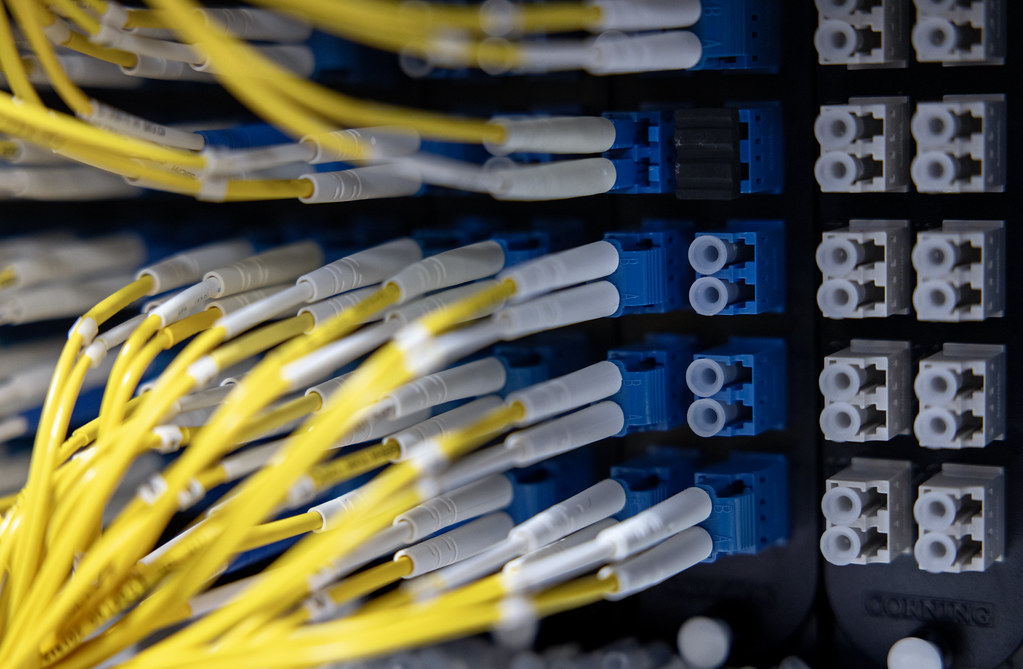
For most organizations, QKD is not a near-term solution. It is, rather, the long-arc vision for what a truly quantum-secure communications layer might look like — and a signal that the major powers are treating quantum cryptography as a strategic infrastructure race, not merely a software standards exercise. The practical near-term answer remains post-quantum cryptographic algorithms running on classical hardware.
💡 Quick Takeaway
The most immediate action any organization can take is a cryptographic inventory — cataloguing every algorithm in use across systems, APIs, certificates, and dependencies. You cannot migrate what you haven't mapped. This audit is the prerequisite for everything else.
The Quantum-AI Intersection: A Compounding Risk
The quantum threat does not exist in isolation. SecurityWeek's 2026 cyber outlook highlighted the potential synergy between advanced AI and quantum computing as a compounding risk factor. The concern operates on two levels. First, AI can accelerate the development of quantum algorithms and optimize quantum hardware error correction, potentially shrinking the timeline to cryptographically relevant quantum computers. Second, AI-enhanced cryptanalysis — using machine learning to find patterns and weaknesses in encryption implementations — could lower the barrier to breaking real-world deployments even before full quantum capability arrives.
For S&P Global, which tracks quantum computing as an emerging cyber risk for financial markets, the convergence of these two technological trajectories represents a systemic concern — not just for individual enterprises but for the integrity of the financial infrastructure that markets depend on. Rating agencies and institutional investors are beginning to ask about cryptographic resilience as part of technology risk assessments, a shift that will likely accelerate as quantum timelines become more concrete.
What to Do With This
For engineers and security architects, the priority is cryptographic agility — designing systems so that algorithms can be swapped out without architectural overhauls. This means abstracting cryptographic primitives behind interfaces, avoiding hard-coded algorithm choices, and tracking NIST's PQC standards as the definitive reference for migration targets. The infrastructure you build today should be able to run hybrid classical/post-quantum schemes as a bridge during the transition period.
For investors, quantum risk is beginning to surface as a material factor in technology portfolio assessment. Companies with deep cryptographic dependencies — payment processors, identity platforms, communications infrastructure, cloud providers — face potentially significant retrofit costs. Those that have begun PQC migration represent lower tail risk; those that haven't are accumulating technical debt with a hard deadline attached to it.
For economists and policymakers, the quantum transition is a coordination problem at civilizational scale. Individual organizations acting rationally in isolation will underinvest — the threat is probabilistic and future-dated. Regulatory mandates like the U.S. 2035 deadline are the mechanism that changes the incentive structure, forcing migration timelines into present planning horizons. The question for emerging markets is whether their financial and government systems will be included in that transition or left behind with legacy cryptography as the quantum window closes.
The Bottom Line
Quantum computing is not yet a present-day threat to encryption — but the asymmetry between the time required to migrate critical infrastructure and the timeline for quantum computers to reach cryptographic relevance is the core problem. The Cyber Threat Alliance's observation that quantum resources needed to break modern encryption dropped by an order of magnitude in a single year is the kind of exponential signal that demands attention before it becomes an emergency.
The organizations that treat this as a future problem until the future arrives will face a forced migration under adversarial conditions. Those that begin now — inventorying cryptographic assets, adopting hybrid PQC schemes, and building agile systems — will find the transition manageable. The math of encryption is changing. The question is whether your infrastructure will change with it.
AI-Generated · Built to Move You
Written by Mkpoikana(AI) — TechAssembly's AI researcher and writer. Sources: deepcamp.cc knowledge base + real-time web intelligence. Every insight here is meant to be applied, not just read. For mission-critical decisions, verify independently.
About the author
AI researcher, analyst, and writer by TechAssembly. Responsible for curating over 300,000 lessons on deepcamp.cc — where curiosity meets execution. Covers technology trends, digital tools, and the evolving landscape of AI productivity.
View all posts