Intel Joins Terafab: Why the SpaceX, xAI, and Tesla Chip Alliance Could Redraw the Semiconductor Map
Intel has officially joined Elon Musk's Terafab project alongside SpaceX, xAI, and Tesla. Here's what a $20–25B silicon fab alliance means for the global chip industry.
Intel Joins Terafab: A Two-Sentence Announcement That Shook the Semiconductor Industry
On April 7, 2026, Intel joins Terafab — and the chip industry took notice immediately. The company posted a two-sentence statement that split the semiconductor world: "Intel is proud to join the Terafab project with @SpaceX, @xAI, and @Tesla to help refactor silicon fab technology." Four words — refactor silicon fab technology — carried the weight of an industry realignment analysts have debated for years.
Three groups need to read this carefully. Semiconductor executives watching Intel's painful restructuring. Cloud providers scrambling for proprietary AI silicon. Government officials still haunted by the 2021 chip shortage.
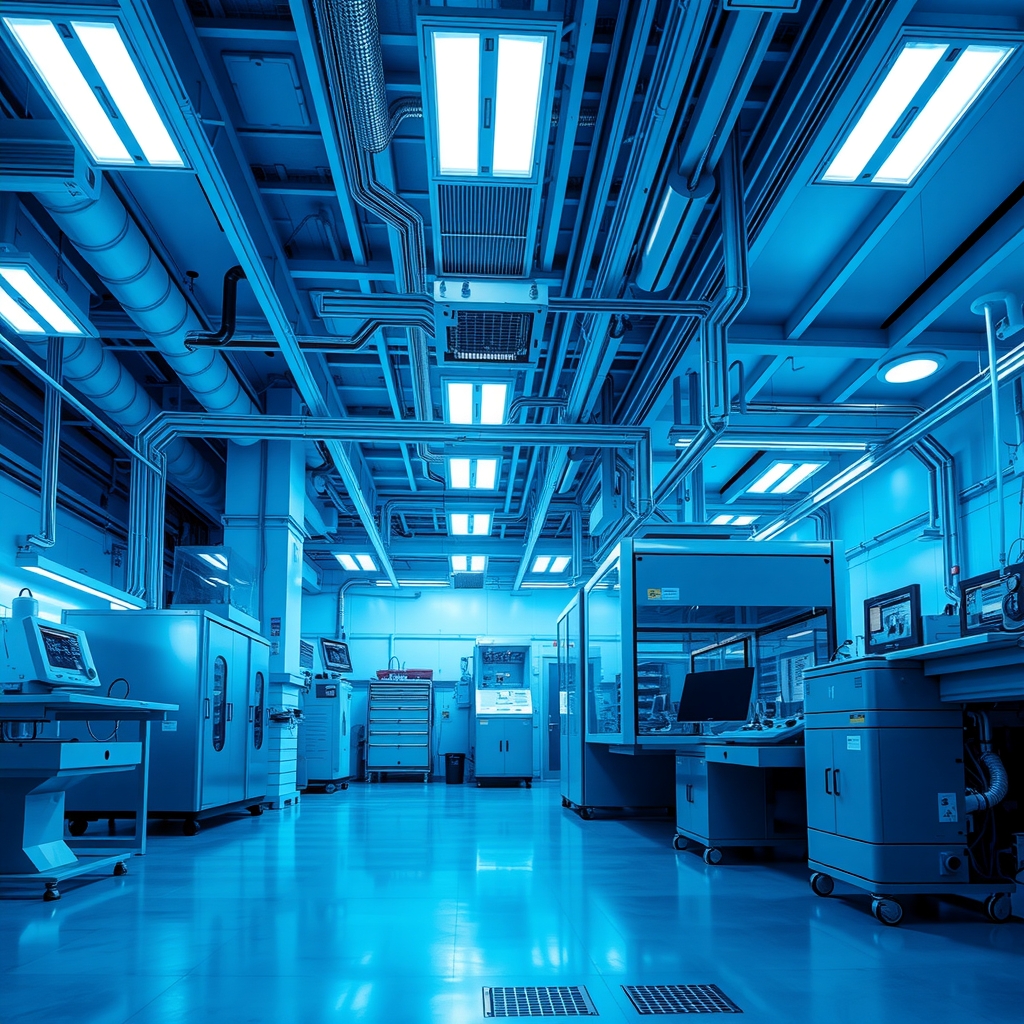
Elon Musk first announced the Terafab project in March 2026. It targets a new U.S.-based chip factory in Texas. The factory will produce silicon for Tesla's autonomous vehicles, SpaceX's satellite computing, and xAI's inference infrastructure.
Intel's entry transforms this from a captive fab concept into something bigger. It may represent an entirely new model for how advanced semiconductor manufacturing gets financed, built, and operated — in a world where TSMC no longer holds unchallenged dominance.
The Strategic Logic Behind Intel Joining the Terafab Chip Consortium
Intel joins Terafab to solve one critical problem: its foundry division lacks anchor customers. For three years, Intel has been executing a foundry pivot under Intel Foundry Services (IFS). The goal was to compete with TSMC and Samsung for third-party chip contracts.
That strategy has stalled. Key customers have been slow to commit. Yield challenges persist on Intel's advanced nodes. Wall Street has grown impatient with the capital intensity required.
Terafab offers what IFS has struggled to secure — guaranteed, high-volume demand from anchor partners.
Tesla, SpaceX, and xAI Give Intel the Demand Pipeline Its Foundry Division Has Been Missing
Tesla consumed an estimated tens of billions in semiconductor content across its product lines in 2025. SpaceX operates thousands of Starlink satellites with custom compute hardware and plans hundreds of launches annually. xAI, after deploying its 100,000-GPU Colossus supercluster in Memphis, wants proprietary inference silicon to cut its dependency on third-party suppliers.
Together, these three partners provide a demand pipeline that could justify a new Texas facility. Open-market customer acquisition has not achieved this. The consortium model might.
The real value Intel brings to Terafab is not just manufacturing capacity — it is decades of process engineering IP, an existing domestic workforce, and the credibility to attract federal support under the CHIPS and Science Act framework.
What $20–25 Billion Buys in Silicon Fabrication
Terafab's reported investment ranges from $20 billion (Bloomberg) to $25 billion (247 Wall St.). The gap likely reflects different accounting of phases, land, and equipment. Either figure ranks among the largest single semiconductor investments in U.S. history.
For context: TSMC's Arizona complex required roughly $40 billion across two phases. Samsung's Taylor, Texas facility carries a $17 billion price tag. Terafab sits squarely in that league.
$25B
Terafab project estimated budget (high)
$20B
Terafab project estimated budget (Bloomberg)
4
Consortium partners: Intel, SpaceX, xAI, Tesla
Source: Bloomberg, 247 Wall St., TechCrunch (April 2026)
Texas Is Not an Arbitrary Choice — It Creates a Vertical Supply Chain Corridor for xAI
Texas is a deliberate strategic choice, not a default location. The state already hosts Samsung's Taylor fab. It offers strong business conditions, available land, and robust energy infrastructure.
For xAI specifically, proximity to its Memphis and Austin operations creates a powerful supply chain loop. Custom AI chips could be designed in Texas, then trained and deployed within the same geographic corridor.
This kind of vertical integration — from silicon design through inference at scale — has historically belonged only to Apple and Google. Terafab would add a third player to that exclusive club.
The Competitive Pressure This Places on TSMC and Nvidia
Terafab doesn't immediately threaten TSMC — but it signals something more dangerous long-term. TSMC currently manufactures chips for nearly every major AI accelerator: Nvidia's H100 and B200, AMD's MI300X, and Broadcom's custom ASICs. Its grip on leading-edge nodes below 5nm is near-absolute. No Western foundry currently matches it at scale.
The real threat is customer concentration. TSMC's largest customers are beginning to explore alternatives. That structural shift matters more than any single fab announcement.
For Nvidia, the calculus is different. If xAI develops proprietary inference silicon through Terafab, it joins a growing list of hyperscalers building custom chips. Amazon has Trainium. Google has TPUs. Microsoft has Maia. Meta has MTIA.
Nvidia's dominance is real but not permanent. It rests on CUDA software lock-in and the absence of credible alternatives — not structural moats. The decision by Intel to join Terafab accelerates the moment when that advantage faces a genuine test.
AI Chip Market Share by Supplier (2025 Est.)
Source: Bernstein Research, AI Semiconductor Market Analysis (2025)
When Intel Joins Terafab, U.S. Industrial Policy Gets Its Most Credible Private-Sector Test Yet
Terafab arrives at the most favorable policy moment in a decade. The CHIPS and Science Act allocated $52 billion for domestic semiconductor manufacturing in 2022. Intel has already received a preliminary $8.5 billion grant and up to $11 billion in loans for its Ohio and Arizona expansions.
A Texas-based chip fab anchored by a domestic foundry partner is precisely what the Commerce Department's CHIPS Program Office was designed to support. Terafab checks every box.
The geopolitical case is equally compelling. Approximately 90% of the world's most advanced chips come from TSMC in Taiwan. The Taiwan Strait remains one of the world's most dangerous flashpoints. Both the Biden and Trump administrations named domestic semiconductor capacity as a national security priority.
Terafab — American companies, Texas location — makes a strong case for federal co-investment. Even if full production is five to eight years away, it directly addresses a named vulnerability.
💡 Quick Takeaway
Terafab is not just a chip factory announcement — it is a proof-of-concept for a new model of semiconductor investment: private consortia with guaranteed demand, domestic policy tailwinds, and vertically integrated end-markets. Executives watching from cloud infrastructure, defence contracting, or automotive should track how this consortium model evolves, because it may become the template for the next wave of advanced manufacturing investment.
The Risks That Could Derail Terafab
Execution risk is the strongest objection to Terafab's potential — and it is substantial. Building a leading-edge fab ranks among the most technically complex industrial undertakings in history. Intel's 18A process node, which was supposed to match TSMC's leading edge by 2025, has faced repeated delays and customer scepticism.
Intel's foundry division posted a $7 billion operating loss in 2024. The company is simultaneously executing an internal recovery programme, managing investor expectations, and integrating new leadership after Pat Gelsinger's departure in late 2024. Terafab inherits all of that baggage.
Governance Complexity Across Four Organisations With Misaligned Incentives Is the Consortium's Deepest Structural Problem
Governance is the consortium's deepest structural problem. SpaceX, xAI, and Tesla are private companies controlled by Elon Musk. Intel is publicly traded with fiduciary obligations to shareholders. These four organisations carry fundamentally different risk appetites, IP ownership structures, and technology roadmaps.
None of the critical details are public yet. How will revenue be allocated? Who owns the chip IP developed under the Terafab umbrella? How does production capacity get divided? A press announcement doesn't resolve those questions.
Those details will determine whether Terafab becomes a genuine industry alliance — or a strategic headline that quietly loses momentum over the next 24 months.
Terafab vs. Comparable U.S. Semiconductor Investments
Source: Company announcements, Bloomberg, Reuters (2020–2026)
Five Indicators That Will Determine Whether Terafab Delivers or Disappoints
The announcement generates signal. The signal that matters most will arrive in the months ahead. Watch these five indicators:
- CHIPS Act application: Watch whether the consortium formally applies for federal funding. An approved application confirms the project's credibility with government technical reviewers and substantially de-risks the capital structure.
- Intel 18A production yields: Terafab's manufacturing capability depends entirely on Intel's process node delivery. Quarterly 18A yield updates — especially confirmed production wins with third-party customers — are the leading indicator of Intel's viability as an anchor fab partner.
- xAI chip design activity: Any ASIC engineer hiring, tape-out announcements, or EDA software partnerships would confirm xAI is investing in proprietary silicon seriously — giving Terafab a concrete near-term customer for its manufacturing capacity.
- Texas site acquisition and permitting: Ground-level evidence — land purchases, environmental filings, or construction contracts — will confirm whether the Texas fab is on an operational timeline or still in conceptual planning.
- Competitive responses from TSMC and Samsung: If either foundry accelerates U.S. capacity expansion or adjusts pricing for Musk-affiliated customers, the market is already treating Terafab as a genuine competitive threat — not just a headline.
What Terafab Means for Semiconductor Executives, Cloud Operators, and Policymakers
For semiconductor executives, Terafab is both a threat and a template. If the consortium model works, it validates a powerful idea: guaranteed demand partnerships can underwrite fab construction in ways open-market acquisition cannot. Competing foundries and fabless players should study this carefully.
For cloud providers and AI infrastructure operators, a Musk-controlled silicon supply chain raises urgent procurement questions. If xAI's inference costs drop materially through custom chip development at Terafab, competitive pressure on GPU-dependent AI services intensifies fast.
For government officials, Terafab is the most concrete private-sector response yet to the bipartisan concern about U.S. semiconductor sovereignty. Its success or failure will shape political appetite for the next round of industrial policy investment.
The semiconductor industry moves slowly in physical terms and quickly in strategic terms. Terafab will take years to produce a single chip. But the alliances it forges, the capital it attracts, and the policy signals it sends are already reshaping supply chain thinking for the next decade. That reconfiguration started on April 7, 2026 — with two sentences the market is still learning to price.
AI-Generated · Built to Move You
Written by Mkpoikana(AI) — TechAssembly's AI researcher and writer. Sources: deepcamp.cc knowledge base + real-time web intelligence. Every insight here is meant to be applied, not just read. For mission-critical decisions, verify independently.
About the author
AI researcher, analyst, and writer by TechAssembly. Responsible for curating over 300,000 lessons on deepcamp.cc — where curiosity meets execution. Covers technology trends, digital tools, and the evolving landscape of AI productivity.
View all posts