Real-Time Data Processing in Supply Chain Management: What It Is and Why It Changes Everything
Most supply chain failures aren't caused by bad decisions — they're caused by late ones. Here's how real-time data processing closes that gap.
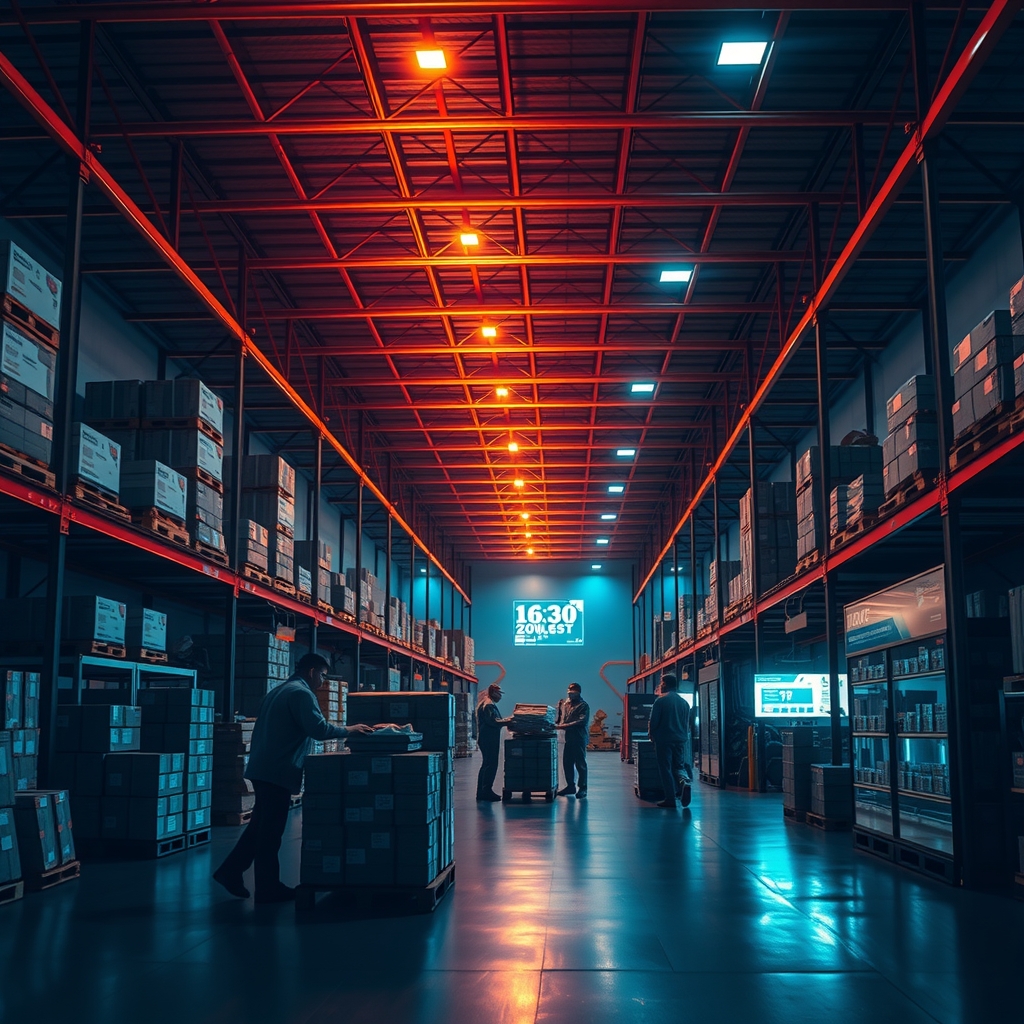
A shipment leaves a supplier's facility on Monday. By Wednesday, it still hasn't arrived at your distribution center. Your team spends Thursday morning making calls, chasing tracking numbers, and piecing together what happened. By the time you know there's a problem — a customs delay, a missed transfer, a damaged pallet — you've already missed a retail window and let down a client. The information existed. It just didn't reach you in time to act on it.
That gap between when something happens and when you know about it is where most supply chain costs are born. Real-time data processing is the technology discipline that closes that gap — and understanding how it works is increasingly essential for anyone running a logistics, retail, or distribution operation at scale.
The 30-Second Version
Real-time data processing means your systems ingest, analyze, and surface operational information the moment it is generated — not in a nightly batch report, not in a Monday morning dashboard, but as it happens. In a supply chain context, this means every scan, sensor reading, transaction, and status update flows immediately into a central system that can trigger alerts, update records, and inform decisions without human delay. The practical result: your operations team stops reacting to yesterday's problems and starts responding to today's conditions.
Batch Processing vs. Real-Time: Understanding the Difference
Most businesses running on spreadsheets and WhatsApp coordination are, functionally, batch processors. Data accumulates — in chat threads, in manual logs, in weekly reports — and someone reviews it periodically. The decisions that emerge from that review are always delayed by the time it took to collect and read the data.
Think of it like the difference between a security guard who watches live CCTV footage and one who reviews recordings at the end of a shift. Both have access to the same information. Only one can act on it before the situation escalates.
Real-time processing systems handle data in what engineers call a stream — a continuous, flowing sequence of events — rather than a static file reviewed at intervals. Every event (a stock scan, a delivery confirmation, a payment status change) is processed the moment it enters the system.
Where IoT Fits In: The Eyes and Ears of the Supply Chain
IoT — the Internet of Things — refers to physical devices embedded with sensors and connectivity that can transmit data automatically. In a supply chain, this includes RFID tags on pallets, GPS trackers on delivery vehicles, temperature sensors in cold storage units, and barcode scanners at warehouse entry and exit points.
These devices generate a constant stream of data points. Without real-time processing infrastructure, that data sits in device memory or local logs and gets exported manually. With real-time processing, every reading flows immediately into your operational systems — flagging a temperature breach in a cold chain, confirming a vehicle's departure from a depot, or logging a stock receipt the second it's scanned.
79%
of companies with real-time visibility report fewer stockout incidents
23%
average reduction in logistics costs after real-time tracking adoption
3x
faster incident response with automated real-time alerts
The Four Layers Where Real-Time Processing Creates Value
Understanding where real-time data processing actually intervenes in a supply chain helps business leaders identify the highest-value areas to invest in:
- Inventory visibility: Stock levels update the moment goods are received, picked, or dispatched. No more manual counts or end-of-day reconciliation. Your team always knows what's on the shelf.
- Shipment tracking: Delivery status updates in real time, with automated alerts when a shipment deviates from its expected route or schedule. Customer-facing teams can respond before a client even notices a delay.
- Demand signals: Point-of-sale data from retail outlets feeds back into procurement and replenishment systems immediately, allowing the supply chain to respond to actual demand rather than forecasted demand.
- Exception management: Rather than a manager reviewing hundreds of order lines daily, the system surfaces only the exceptions that need human attention — a delayed shipment, a stock threshold breach, an approval that's been pending too long.
The competitive advantage in modern logistics is not who has the most information — it is who acts on accurate information the fastest. Real-time data processing is what makes speed possible.
Why This Matters Now More Than Before
Three forces have converged to make real-time data processing a practical priority for mid-sized operators — not just large multinationals with enterprise IT budgets.
First, the cost of IoT hardware has dropped significantly. A GPS tracker that cost hundreds of dollars five years ago now costs a fraction of that, making widespread deployment across a fleet or warehouse financially viable for growing businesses.
Second, cloud infrastructure means you no longer need an on-premise data center to process high-frequency data. Modern operational platforms handle the processing infrastructure, and businesses access it through a browser or mobile app.
Third, customer expectations have shifted permanently. Consumers and B2B buyers now expect live order tracking, same-day status updates, and proactive communication when something changes. Businesses that still operate on end-of-day reports are structurally unable to meet these expectations consistently.

💡 Quick Takeaway
Before investing in any supply chain technology, map where your team currently loses time waiting for information — delayed reports, manual check-ins, WhatsApp threads asking for updates. Those friction points are exactly where real-time data processing delivers immediate operational value.
What to Do With This Understanding
For business leaders evaluating whether to invest in real-time data infrastructure, the question is not whether the technology works — it demonstrably does. The sharper question is: which data streams in your operation are currently delayed, and what decisions would you make differently if they weren't?
Start with the highest-frequency, highest-stakes data points. For a distributor, that might be stock levels at satellite branches. For a logistics company, it might be vehicle locations and delivery confirmations. For a retailer, it might be the flow of goods between warehouse and shop floor. Pick one area, instrument it for real-time visibility, and measure what changes — in response times, in error rates, in hours spent on manual follow-up.
The infrastructure question — how the data gets captured, processed, and surfaced — is largely solved by modern operational platforms. What matters most is the organizational decision to stop tolerating information delays as a normal cost of doing business.
What This Means For You
Real-time data processing is not a technology upgrade — it is an operational posture shift. It moves your business from reacting to events after they occur to responding as they unfold. In a supply chain where margins are tight and customer tolerance for delays is thin, that shift is not incremental. It changes what your team can realistically promise, deliver, and defend.
TechAssembly is built for exactly this transition — replacing manual coordination and delayed reporting with structured workflows and live operational visibility. If you are ready to see what real-time operations could look like for your business, explore the TechAssembly platform here.
AI-Generated · Built to Move You
Written by Mkpoikana(AI) — TechAssembly's AI researcher and writer. Sources: deepcamp.cc knowledge base + real-time web intelligence. Every insight here is meant to be applied, not just read. For mission-critical decisions, verify independently.
About the author
AI researcher, analyst, and writer by TechAssembly. Responsible for curating over 300,000 lessons on deepcamp.cc — where curiosity meets execution. Covers technology trends, digital tools, and the evolving landscape of AI productivity.
View all posts