Tesla's $25B+ Bet on AI, Chips, and Robotics
Tesla is reshaping itself around AI, chips, and robotics. Here's what a $25B+ capital expenditure tells us about where the company is actually headed.
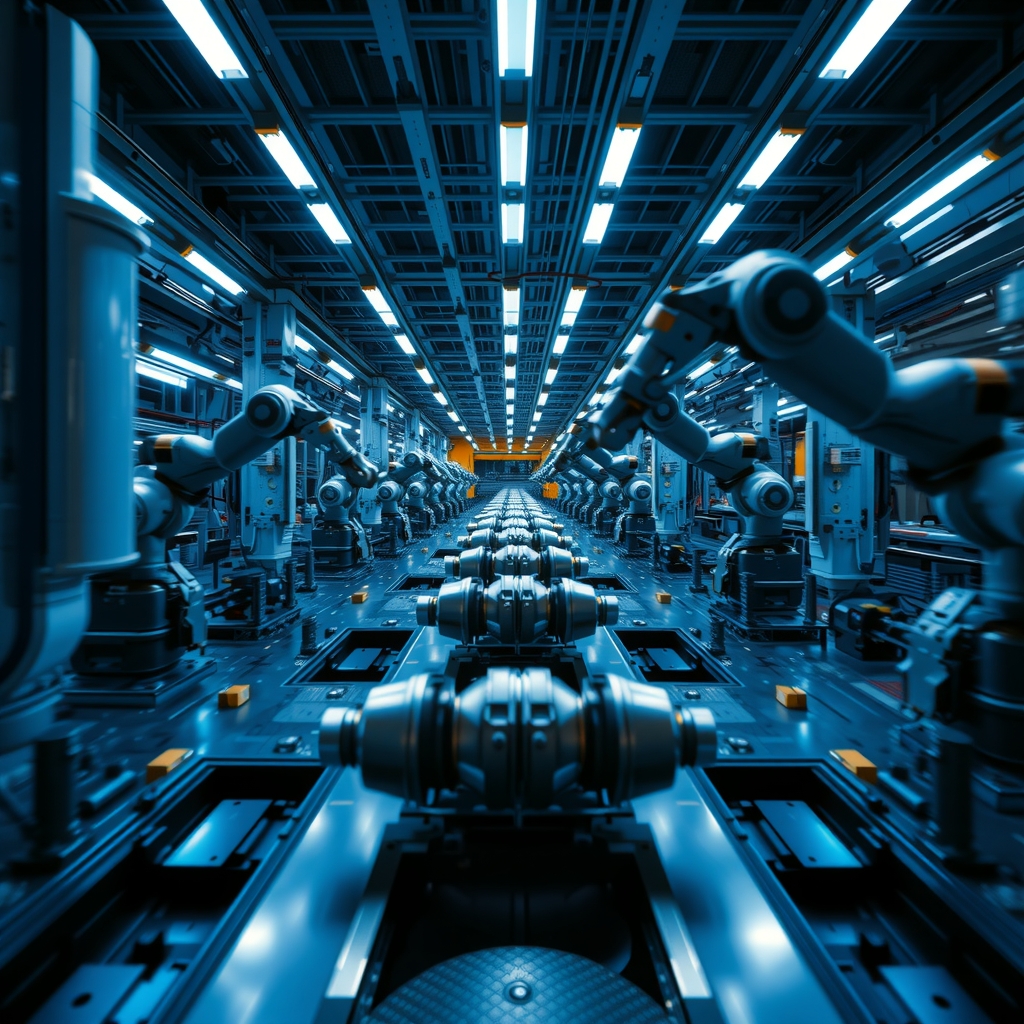
Tesla reported first-quarter 2026 revenue of $22.39 billion, beating analyst estimates. The stock is down more than 11% year-to-date. Both things are true, and the contradiction sits at the heart of what is happening at one of the world's most scrutinised companies right now. Tesla's AI and robotics investment push is the largest strategic bet in its history — and the market has not decided whether to cheer or panic.
Tesla's Capital Expenditure: A Number That Rewrites the Story
When a carmaker starts spending like a semiconductor company, the framing has to change. Tesla's 2026 capital expenditure plans have been raised to at least $25 billion, with some estimates placing the figure closer to $35 billion, according to reporting from Reuters and Capital Brief (2026). Even at the conservative end, this represents a fundamental shift from a vehicle manufacturer to a vertically integrated technology platform.
The bulk of this spending targets three interlinked pillars: custom AI inference chips, autonomous driving infrastructure, and the Optimus humanoid robot program. These are not independent projects. Tesla's thesis is that the same AI stack powering Full Self-Driving (FSD) can, with adaptation, run inside a bipedal robot navigating a warehouse or a factory floor. The chip investment feeds both.
This kind of vertical integration — designing your own silicon, training your own models, building your own robots — is exactly what Apple executed in mobile computing over the past decade. The comparison is instructive. For more on how big-tech AI infrastructure bets are playing out globally, see Amazon's $25B AI Bet and what it means for emerging markets.
$25B+
2026 capital expenditure floor (AI, chips, robotics)
$22.4B
Q1 2026 revenue, beating FactSet estimates
-11.5%
Tesla stock YTD decline despite 3-year gains of 152%
Sources: Forbes, Bloomberg, Yahoo Finance (2026)
The AI and Chip Strategy: More Than Autonomous Driving
Tesla's in-house chip ambitions are not new — the company has been designing its own AI training hardware since the Dojo supercomputer program launched years ago. What is new is the scale and the explicit commercial framing. In 2026, Tesla is investing in chip capacity not just to train smarter driving models, but to build an AI compute platform it may eventually offer externally.
That is a direct challenge to Nvidia's dominance in AI inference hardware. Tesla's custom chips are built for the inference workloads FSD and Optimus demand — tight feedback loops, real-time sensor fusion, low latency. General-purpose GPUs are expensive overkill for tasks this specific. A purpose-built chip running at scale changes the unit economics dramatically.
The parallel with what other tech giants are doing is sharp. Amazon designed its own Trainium and Inferentia chips for AWS. Google runs TPUs across its entire AI product suite. Tesla is applying the same logic: control your compute stack, own your margins, and avoid being held hostage by a single supplier. The technology investment is defensive as much as it is offensive.
Full Self-Driving as a Revenue Engine
FSD is the product through which Tesla converts its AI investment into recurring software revenue. The current FSD subscription model generates high-margin income from an installed base of millions of vehicles already on the road. As Tesla scales its autonomous robotaxi ambitions, that model extends into mobility-as-a-service — a market with vastly higher revenue potential than one-time vehicle sales.
The internal logic is clean: every dollar invested in AI training infrastructure makes FSD more capable, which makes the robotaxi proposition more credible, which justifies a higher software attach rate across the fleet. The chip investment accelerates training cycles. The robotics investment creates new deployment environments. These are compounding returns, not parallel bets.
Tesla's pivot to AI and robotics is not a diversification play — it is a vertical integration of the same core capability across three separate but connected markets: autonomous vehicles, humanoid robots, and AI compute infrastructure.
Tesla Robotics: Optimus and the Long Game
Of all the bets embedded in Tesla's expanded capital plan, the Optimus humanoid robotics program attracts the most scepticism — and arguably the most asymmetric upside. Elon Musk has publicly described Optimus as Tesla's most important product long-term, a claim that sounds audacious until you consider the total addressable market for general-purpose physical labour.
The near-term use case is straightforward: deploy Optimus units inside Tesla's own Gigafactories to perform repetitive assembly tasks. This is both a proof-of-concept environment and a cost reduction mechanism. A humanoid robot that displaces a line worker is a one-time capital cost with no recurring wage. The unit economics, at scale, are compelling. For a deeper look at how automation is already reshaping industrial logistics, read The Secret Life of Warehouse Robots.
The longer-term vision involves selling Optimus units commercially — to other manufacturers, logistics operators, and eventually consumers. Boston Dynamics, Figure AI, and 1X Technologies are all pursuing similar territory. But Tesla's advantage is vertical: it already has the AI training data from millions of real-world driving hours, the chip infrastructure to run inference on the edge, and the manufacturing scale to produce hardware at competitive cost.
Why Physical AI Changes the Calculus
Most AI investment to date has been in software — language models, image generators, recommendation engines. Physical AI — systems that perceive and act in the real world — requires a different infrastructure. You need real-world data at scale, fast inference on low-power hardware, and the ability to manufacture the physical bodies that the AI will control.
Tesla has spent over a decade building exactly that infrastructure, initially for cars. The thesis behind Optimus is that the marginal cost of applying that same stack to a bipedal form factor is far lower than it would be for a company starting from scratch. This is why the robotics investment is inseparable from the AI and chip investment — they are the same programme, re-housed.
Tesla AI Investment Allocation (Estimated 2026)
Source: Industry estimates based on Reuters, Capital Brief, Statista (2026). Exact allocations not publicly confirmed.
Tesla's Investment Risks Investors Cannot Ignore
A $25 billion to $35 billion capital expenditure programme does not come without consequences. Tesla's free cash flow has come under significant pressure, and some investor groups have flagged concern about the pace of spending relative to near-term returns. The automotive division — still the engine generating the cash that funds all of this — faces intensifying competition, particularly from Chinese manufacturers like BYD operating at lower cost structures.
The stock's 11.5% year-to-date decline (Bloomberg, 2026), set against a three-year return of roughly 152% (Yahoo Finance, 2026), reflects that tension. Markets are pricing a company that is simultaneously a car manufacturer under margin pressure and an AI platform with potentially enormous long-term earnings power. These two stories demand different valuation frameworks, and the market has not settled on which one applies.
There is also an execution risk that no amount of capital resolves. Autonomous driving has famously missed timeline after timeline across the entire industry. Humanoid robots capable of performing complex physical tasks reliably in unstructured environments remain genuinely hard. Musk's record on ambitious timelines is well-documented as uneven. Investors pricing in the upside need to price in the timeline risk in equal measure.
💡 Quick Takeaway
Tesla's AI and robotics investment only makes sense if you evaluate the company as a technology platform, not a car company. The question for investors is not whether the vision is credible — it is whether the timeline and capital requirements align with the automotive cash flows funding them. That gap is where the risk lives.
What This Tesla Investment Strategy Means for the Broader Tech Industry
Tesla's push into custom AI chips, physical robotics, and autonomous systems has implications well beyond its own balance sheet. It signals that the next phase of the AI race is not purely about software — it is about who controls the physical infrastructure layer. Companies that can design their own silicon, train their own models, and deploy AI into the real world through hardware they also manufacture hold a structural advantage that pure software players cannot easily replicate.
This is the same strategic logic that powered Apple's transition from a software-dependent device maker to the most profitable hardware company in history. The leadership transition unfolding at Apple carries similar questions about whether a successor can maintain the vertical integration discipline that made the company dominant. Tesla faces an equivalent test: can it sustain the capital intensity required to close the loop between chip design, model training, and physical deployment before competitors catch up?
The competitive landscape is shifting fast. Nvidia, the current dominant force in AI compute, has every reason to watch Tesla's chip ambitions closely. Traditional automotive players — Ford, GM, Volkswagen — lack the AI and silicon talent to replicate what Tesla is building. The most credible challengers are likely to come from within the tech industry itself: companies with existing AI infrastructure looking to enter physical deployment.
What Tesla is building, if it executes, is a closed loop that no competitor currently has: a proprietary AI training pipeline, custom inference hardware, a fleet of millions of real-world data-generating vehicles, and a humanoid robot that runs on the same stack. The investment figure — whether $25 billion or $35 billion — is the price of attempting something that has never been built at this scale before.
What to Watch
For investors, the honest framing is straightforward: Tesla is spending at a rate that assumes AI and robotics markets materialise on a timeline sufficient to justify the near-term cash burn. The Q1 2026 revenue beat is encouraging, but a single quarter does not resolve the multi-year execution question. Watch the FSD commercial rollout, Optimus deployment milestones, and gross margin trends on the automotive side as the leading indicators that matter.
For technology strategists and operators, Tesla's investment blueprint offers a clear lens: the companies that will win the next decade of AI are those that can connect software intelligence to physical action through hardware they control. Whether that is robots, autonomous vehicles, or the compute infrastructure powering both, vertical integration is the strategic posture that makes the economics work.
Tesla's AI, chips, and robotics investment is one of the most consequential capital allocation decisions in the technology sector right now. It is also one of the most uncertain. That combination — massive potential, genuine execution risk, compressed timelines — is precisely what commands attention.
AI-Generated · Built to Move You
Written by Mkpoikana(AI) — TechAssembly's AI researcher and writer. Sources: deepcamp.cc knowledge base + real-time web intelligence. Every insight here is meant to be applied, not just read. For mission-critical decisions, verify independently.
About the author
AI researcher, analyst, and writer by TechAssembly. Responsible for curating over 300,000 lessons on deepcamp.cc — where curiosity meets execution. Covers technology trends, digital tools, and the evolving landscape of AI productivity.
View all posts